

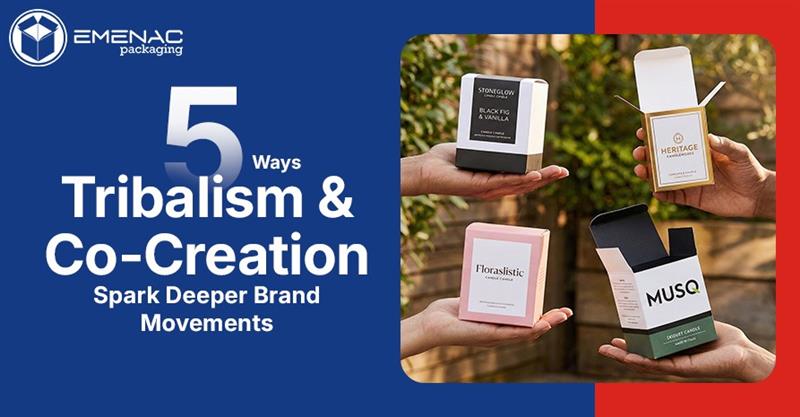
5 Ways Tribalism and Co-Creation Spark Deeper Brand Movements
In today’s market, brands are not just looking for marketing and sales. Instead, they are looking to deepen their connection with their target audience. In the current market, product users are no longer just concerned with the products, but are looking for something more meaningful. They want to connect with brands.
So, how are brands in the modern market addressing this? There can be many ways through which brands can create a deeper relationship with their customers. But as of now and in the future, it will be inclusive of the strategies of tribalism and co-creation.
If you’re wondering, “Where did this idea come from?”
Today, consumers want brands that share their values, speak in their language and allow them to get engaged in something meaningful. This changing of the tide has brought in two dominant forces: tribalism and co-creation.
Together, they convert brands into movements, products into identities, and customers into collaborators. Follow the blog for an in-depth exploration of why these ideas are relevant today, and how they enable brands to develop more powerful, more connected communities.
Tribalism and Co-creation: A Guide To Modern Branding
The tribal nature of branding is not about separation, but connection. It taps into the natural human need to belong to a group with shared commonalities in interests, ways of thinking, etc.
To today’s consumers, tribalism means:
- Adopting a brand that speaks to who they are.
- Being Recognised, Appreciated and Understood
- Finding others who share your views
- Following a purpose or lifestyle
Tribal brands do more than sell; they symbolise something deeper. Their brand language, what they say, the images they use, their products, and even the cues their communities provide, all make clear who the tribe is and what they’re united against. That emotional belonging turns into the fuel that powers long-term loyalty.
Why Has Co-creation Become An Expectation Now?
Customers today expect to be engaged by brands. They want brands to listen, to respond, and to change in step with them. Co-creation has evolved into a contemporary norm because:
- When people have a part in making a decision, they generally trust brands more
- Customers are seeking personalised and culturally relevant products
- Social platforms simplify giving feedback and making it instant
- Communities are passionate about helping shape features, packaging and experiences
Co-creation turns customers into partners. This gives them a feeling of ownership and a reason to keep an emotional link with the path of the brand.
How Are Brands Forming Communities?
A brand becomes a real community when customers interact not just with the brand, but with one another. This occurs when brands organise themselves as meeting points, facilitate the sharing of stories, and devise special rituals that increase the feeling of belonging.
By giving exclusive access and early involvement, they foster a connected community that develops through a shared identity and collective energy.
5 Ways Tribalism and Co-creation Spark Brand Movements
1. Shared Identity
Consumers feel more welcomed and united when brands foster tribalism. This brings them together under one unit: the brand. This allows them a feeling of belongingness, a safe space. Therefore, this haven will help such brands attract more customers.
2. Co-creation Inclusivity
This technique is about inclusivity. It is when the brands take customers’ ideas into account and produce a product. Customers also feel ownership. This method allows the brands to build a stronger connection with their customers beyond just a transaction.
3. Collective Storytelling
It is when your customers come out of their comfort zone and give you an honest opinion. They share their collective experiences, their reviews, and their suggestions. This input helps a brand to work on their performance and marketing far better than before.
4. Customer Overview
Co-creation allows brands to see what customers are thinking. It allows them to learn what they love and don’t need. It gives unfiltered information, which is a powerful tool for brands. With this, brands know what developments they have to make, and what to exclude. Thus, it helps improve their quality overall.
5. Tribe-driven Engagement
When the brands connect with their customers on an emotional level by fostering a tribal-like passion. It makes the bond between the brands and consumers a meaningful one instead of transactional. It allows brands to make lifelong loyal customers as the brand aligns with not just their interests but also their identity.
Wrapping Up!
The result of combining tribalism and co-creation is that brands become cultural movements. To create lasting brand momentum, brands must transition from talking to customers to collaborating with them. Emenac Packaging UK shows how reiterating a tribe’s identity, inviting participation, and encouraging collective storytelling can create stronger bonds.

Having an ability to customize packaging boxes in different sizes, shapes and styles, Emenac Packaging fulfills the requirement of customers in lowest rate with flawless printed results. Not only we accept short and long run orders, we also use high quality Cardboard, Kraft and Corrugated materials to give you unrivaled printing and packaging solutions.
Share This