

Kraft Tea Boxes vs. Plastic Packs: Which Is Greener?
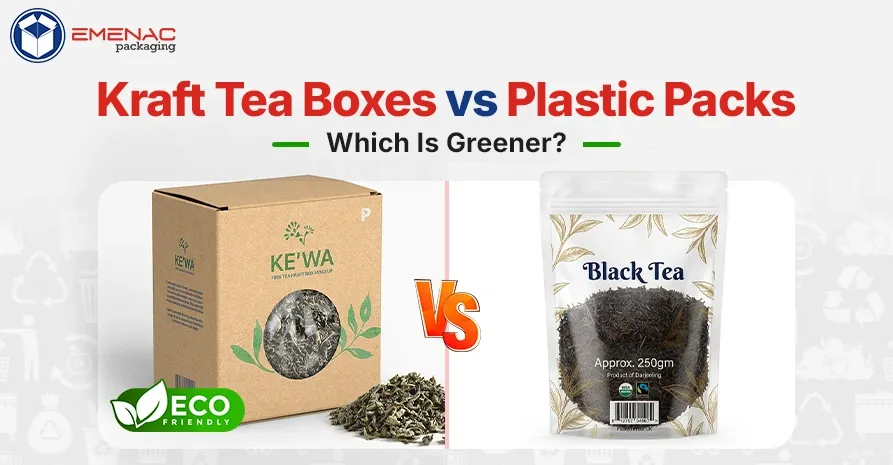
As the tea industry moves toward making sustainable choices, the direct impact falls on the packaging industry as well. As a tea brand owner, you only have two choices: either choose between kraft paper tea boxes or plastic packaging.
According to Grand View Research, in 2025, the UK tea market generated almost USD 3,123.5 million and is forecasted to reach around USD 5,022.1 million by 2033, expanding at an annual growth rate of 6.1%!
In this blog, we are going to tell you about the key differences between plastic packaging and kraft paper tea boxes and which one is the greener, more sustainable choice for your brand, especially if you support eco-friendly goals. Let’s give you some new pieces of information!
What Is The Difference Between Kraft Tea Boxes And Plastic Tea Pouches?
If you don’t know about the key difference between Kraft and plastic tea pouches, then we will break it down for you. Kraft tea boxes are created using wood-pulp paper that is often recycled or sourced from sustainable materials. As they are customisable & lightweight, they are used for the mass tea packaging industry. Conversely, plastic tea packs or pouches usually include PE (polyethylene), PTE (polyethylene terephthalate), or plastic films that are multi-layered for protection against moisture and ensuring durability.
Both of the tea packaging are designed for one purpose: protecting the freshness of tea; however, the environmental impact of both the packaging materials is different in nature and influences the planet differently.
How is Compostable Packaging Replacing Traditional Packaging?
For decades, the packaging industry has been filling the landfills with non-recyclable product packaging, including single-use packaging, petroleum-based tea bags, and so on. But with the passing time and global warming, brands are becoming more conscious and making planet-friendly choices.
Compostable tea packaging is everyone’s new favourite choice. It is a small promise to the planet to return the used tea bags to nature. Kraft Tea boxes and pouches are made from plant-based and renewable materials. The tea packaging industry is slowly moving from traditional packaging to compostable packaging as the global trends are quickly reshaping.
Comparison Chart
Attribute | Kraft Tea Packaging | Plastic Pouches |
|---|---|---|
1. Decomposition Time | Weeks–months | Centuries |
2. Recycling Rate | High (80–90%) | Low (<10%) |
3. Carbon Footprint | Lower than plastic packaging | Higher long-term impact |
Conventional Tea Packaging
Mostly, the tea packaging found in the market today is developed for convenient disposal, and the materials used are mostly neglected. The following is the list of materials usually used to package tea bags:
1. Synthetic Tea Bags
The traditional tea bags are made from a mixture of paper and petroleum-derived plastics like polypropylene. Even though this material is added in a small amount, it still contributes to making it non-biodegradable quickly.
2. Plastic Pouches/Packs
A typical tea bag pouch is created using multiple layers; usually, they are a combination of petroleum plastics, foil, and different dyes. They are created in a way so as to develop a thick layer to protect them from moisture. Regardless, these multilayers are inseparable and impossible to recycle. These usually contribute to landfills after a single use.
3. Non-Reusable Boxes
Some tea brands prefer to pack their tea products in cardboard boxes. Nevertheless, some products still have a thin layer of metal or plastic to secure the freshness inside. But these thin layers make the packaging non-compostable and hence non-recyclable.
Biodegradable Tea Packaging
The other category in tea packaging is compostable. If you are currently using this type of packaging, then you can enjoy your favourite tea while contributing positively to the planet.
Biodegradable tea packaging is usually designed in a way so that it can break down easily without adding to landfill waste, usually within 90 days if strict compost conditions are met.
Let us tell you how it’s a transformation for future packaging.
1. Caps Landfill Waste
Biodegradable or compostable tea packaging breaks down into non-toxic particles after being thrown away. This adds nutrients to the soil and makes it rich, and does not add up further to landfills.
2. Reduces Carbon Footprint
Biodegradable material usually leaves a lower carbon footprint throughout its lifecycle. Starting from the process of production to its disposal, it overall reduces greenhouse emissions.
3. Promotes A Circular Economy Model
Biodegradable packaging aligns completely with a circular economy model. The main objective of the closed-loop packaging is to keep the natural resources intact, rather than being discarded after a single use and causing harm to the environment.
Kraft Tea Boxes vs. Plastic Pouches: Which One Is Greener?
Although the plastic can be justified because of various reasons, such as long shelf life and safeguarding the products against moisture by creating a barrier. Despite these facts, we can never ignore its long-term environmental impact, which is extremely harmful.
Conversely, Kraft tea packaging is a healthier and greener choice. Especially if they are coated minimally and are sourced from sustainable or recycled paper. So Kraft tea packaging wins the battle for sure!
Wrap Up
The slow and steady transformation of tea brands from plastic pouches to kraft papers reflects that companies now care more about sustainability. Although both materials have their own advantages, kraft tea boxes will always weigh heavily because they beat the need for plastic, which is detrimental to the environment.
If your brand is also thinking of reducing its ecological footprint, then Kraft packaging is the most optimal long-term strategy. Here at Your Emenac Packaging UK, we have the best kraft boxes available on our website. Call us to know more!
Thank you for reading our blog!

Having an ability to customize packaging boxes in different sizes, shapes and styles, Emenac Packaging fulfills the requirement of customers in lowest rate with flawless printed results. Not only we accept short and long run orders, we also use high quality Cardboard, Kraft and Corrugated materials to give you unrivaled printing and packaging solutions.
Share This